
Is the hype around the health benefits of ancient grains justified? Scientists say its not as clear-cut as you might think.
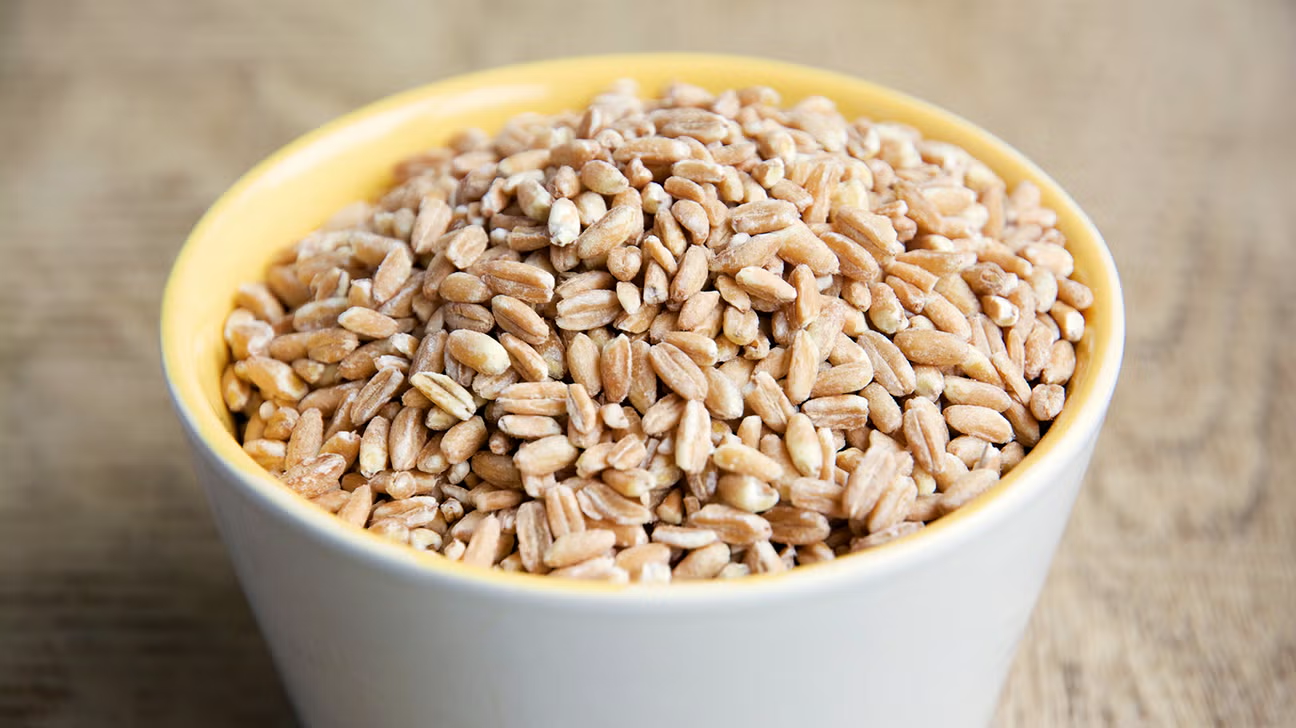
Ancient grains are those that have barely changed for hundreds of years. Unlike commonly farmed crops like wheat, which humans have selectively bred over millennia, ancient grains have maintained genetic properties from their wild ancestors. And today they enjoying something of a resurgence in popularity.
They’re linked to many health claims, including that they contain more nutrients than their modern counterparts.
But are they really any better than more modern grains, which have been shaped and moulded by agricultural practices since the Stone Age?
It’s recommended that at least half of the grains we consume be wholegrains. These are grains that haven’t been ground down and refined in a mill, so they still contain all three of their raw components: the bran, the endosperm and germ, which are rich in vitamins and polyphenols, including protein, vitamin B, iron and fibre.
Wholegrain pasta, for instance, has a distinctive, earthier taste – as well as more fibre, antioxidants and vitamins compared to refined pasta.
Refined grains, on the other hand, have been processed (often milled), and their original structure lost. Along the way, they’ve also lost some fibre and nutrients.